An Off-Season Reset for the Sporting Calendar
An off-season reset for the sporting calendar helps you close one season, protect time for other interests and carry forward only routines that still fit.
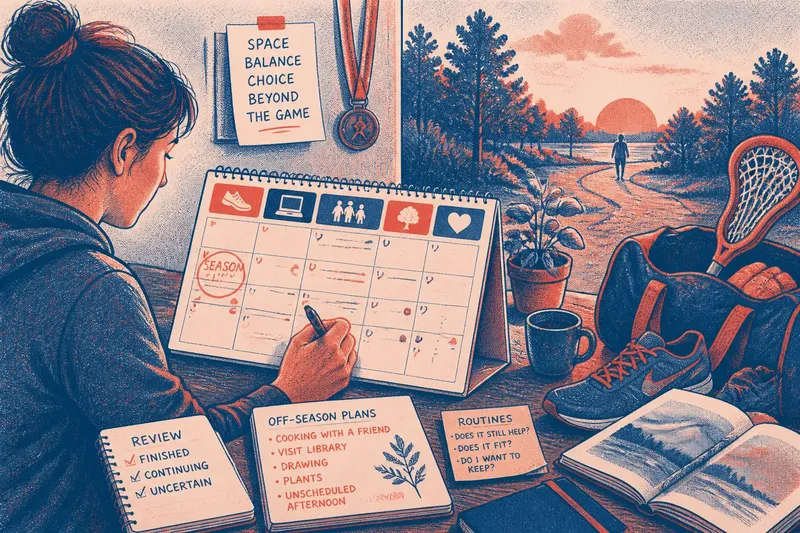
The most common off-season mistake is letting the calendar roll from one season into the next without a deliberate pause. An off-season reset for the sporting calendar costs little effort, but skipping it can leave old commitments occupying the very space you meant to reclaim. Start by making the change visible, then decide what deserves a place in the next stretch of life.
Mark the season change on the calendar
Choose a clear boundary: the last scheduled event, the final team gathering, or the first week without regular competition. Put that marker in your calendar. If your sport has no tidy finish, choose a date that reflects your actual schedule rather than waiting for a perfect ending.
Give the transition a little room. A tournament may end on a Sunday while work, school, travel, or family obligations continue on Monday. Mark a short window after the final event for ordinary loose ends, such as returning borrowed equipment or confirming the next team meeting. Do not turn that window into a new project.
Now look ahead to the next season’s known dates. Add tryouts, league registrations, travel, work deadlines, and recurring family commitments if you already know them. Use tentative labels for uncertain plans. A calendar that distinguishes “confirmed” from “possible” is more useful than one that makes every idea look settled.
Keep the boundary visible. A note such as “season ends” is enough; it does not need to become a grand ritual.
Review commitments before adding new ones
Scan the calendar from the recent season. Include sport, work or classes, caregiving, social plans, and the practical tasks that supported participation. Ask what each commitment required in real life: travel across town, evening meal changes, weekend availability, or coordination with someone else.
Sort the commitments into three groups:
- Finished: events or duties that ended with the season.
- Continuing: obligations that still belong in your week, such as a regular team meeting or a standing family responsibility.
- Uncertain: plans that depend on selection, a work schedule, transport, or another person’s decision.
For each continuing item, decide whether its timing still works. For uncertain items, record the question and when you expect to know the answer. This prevents a possible commitment from silently becoming a fixed one.
Say you finished a club season and had been driving a teammate home after evening practice. You add the lift to the “finished” group, then ask the teammate whether they still need help during the break. The observable result is a calendar that shows only the rides both of you actually plan to continue.
Before adding a new activity, check the time it would occupy, including travel and preparation. A class across town may take more of the week than its meeting time suggests.
Reserve time for interests outside sport
“More free time” is easy to write down and easy to lose. Give non-sport interests an actual place in the calendar, even if the appointment is only a reminder to keep an evening open. Choose activities because you want them, not because they sound like a productive use of a break.
List a few possibilities without ranking them: cooking with a friend, visiting a library, drawing, seeing family, tending plants, or simply having an unscheduled afternoon. Then choose one or two that fit the season you are entering. The aim is not to fill every empty square. It is to make room for something that is not organized around competition.
Check the practical details before you commit. Does the activity need a booking? Is it close enough to reach after work? Would you rather go alone or invite someone? Keep the first plan modest so it remains easy to change if your schedule shifts.
A clear appointment protects an interest better than a vague promise to “do more things.”
Choose which routines to carry forward
Not every routine belongs to the season that created it. Review familiar habits such as preparing a bag the night before, eating at a regular time, setting out work clothes, or checking the next day’s schedule. Separate routines that support everyday life from those that only make sense around training and competition.
For each routine, ask three plain questions: Does it still help? Does it fit the coming schedule? Do I want to keep it? Carry forward the habits that answer yes without turning them into rules you must follow every day. Let seasonal tasks go when their purpose has passed.
Keep the decision concrete. “Stay organized” is too broad to act on. “Check tomorrow’s calendar before dinner on weekdays” has a clear cue and a clear end. If a routine feels burdensome, simplify it or leave it out for now rather than preserving it out of habit.
When a routine depends on training, recovery, or health needs, adapt it with appropriate guidance rather than assuming the off-season calls for a particular change. A coach or qualified health professional can help where personal circumstances matter.
What should you decide before the next season?
How do I set an off-season boundary if competition has no clear end?
Use a real point in your schedule, such as the week after your last planned event or a date before the next training block begins. Record it as a review point, not as a promise that every sporting commitment will stop.
Should I keep every routine that worked during the season?
No. Keep routines that remain useful in ordinary life and fit the calendar ahead. Let sport-specific habits pause when their purpose is over, then reconsider them when the next season calls for them.
What if my next-season dates are not confirmed?
Mark likely dates as tentative and note who or what will confirm them. Leave room around those entries instead of booking the same time twice.
How much non-sport time should I schedule?
Choose an amount that fits your responsibilities and energy rather than copying someone else’s calendar. Even one protected plan can make a non-sport interest easier to keep in view.
Check the calendar as a whole
Read the calendar from the first day of the transition through the start of the next season. Look for double bookings, long runs of commitments, and plans that depend on an unconfirmed decision. Check travel time and the ordinary tasks around each event, not just the event itself.
Then make one final pass for balance. Can you see the season boundary? Are continuing obligations represented accurately? Is there at least one space for an interest beyond sport? Are the routines you kept specific enough to remember? Adjust what is crowded or unclear.
Share relevant changes with people who rely on your schedule. A brief message to a teammate, family member, or training partner can prevent an old arrangement from continuing by assumption. If plans remain uncertain, say so plainly and give a date for checking again.
An off-season reset for the sporting calendar works best as a small decision-making ritual, not a demand to reinvent your life. Mark the change, make room for what matters now, and let the next season earn its place when its details become clear.