Why Athletes Keep More Than One Version of Their Kit
Athletes keep more than one version of their kit because training, travel and competition ask for different things; choose pieces by role, context and meaning.
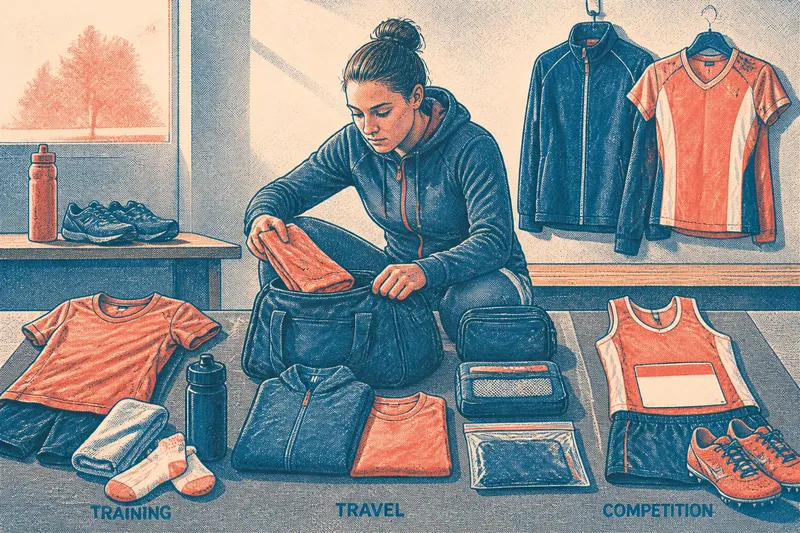
The common mistake is treating every kit item as an interchangeable uniform. That can leave an athlete short of a dry layer after training, awkwardly dressed for travel, or reluctant to wear a competition piece outside its setting. Athletes keep more than one version of their kit because each version can solve a different problem—and carry a different meaning.
A club jersey, a faded practice shirt and a warm-up jacket may all belong to the same sport, yet each has its own job. The useful question is not how many items an athlete owns. It is what each version is for, and whether that purpose still fits.
Training kit earns its place through repeat use
Training clothes answer the ordinary demands of practice: movement, changing conditions, washing and another session soon after. That makes comfort and easy care more important than looking as if the athlete has just arrived at a final. A breathable shirt, flexible shorts or leggings, and a layer that can be removed as the body warms up often do more work than a pristine match-day top.
Training kit also tends to absorb the small signs of a routine. A familiar sweatshirt may be the one an athlete reaches for on an early morning, while a particular pair of socks feels right for drills. Such preferences are practical as well as personal. When a garment is comfortable and suited to the session, the athlete spends less attention adjusting it.
There is no need to make every practice outfit a separate identity. A compact training rotation can serve well if pieces dry between uses and suit the activity. Keep the items that work; let a shirt with a persistent fit problem stop occupying prime space in the kit bag.
Travel kit makes the journey part of the plan
Travel creates a different set of demands. A team tracksuit or soft layer can help an athlete stay comfortable between home, transport and venue, while a change of clothes keeps a sweaty training top from becoming the only option for the ride back. Pockets, easy layering and fabrics that do not feel restrictive while seated may matter more here than they do during a session.
Travel kit can also make a group visible to itself. Matching colors help teammates recognize one another at a station or airport, and a shared jacket can signal that the trip is part of the team’s sporting life. That social role does not mean every athlete must wear the same thing at every moment. Personal comfort still counts.
Think of the bag as a small transition space: clean clothes for the journey, used kit kept apart, and a layer easy to reach if the temperature or setting changes. A separate pouch for damp items can help protect other belongings. Check the garment label and any team or venue requirements when they affect what to wear or pack.
Competition kit carries rules and memory
Competition kit has a more public role. A uniform may need to meet team, league or event expectations, and its fit can affect how freely an athlete moves. The strongest choice is not necessarily the newest one; it is the approved piece that feels suitable for the event and does not distract the athlete. If the uniform is supplied, focus on fit, comfort and any allowed personal layers rather than altering it.
For some athletes, competition clothing also holds a memory of a first start, a team season or a difficult event finished. That attachment can make a jersey worth keeping even when it no longer belongs in regular rotation. It need not be worn to remain meaningful: folding it carefully or storing it with a clear note about its significance gives it a place without confusing it with everyday kit.
Not every item needs sentimental status. Keeping a few meaningful pieces is different from saving every worn-out garment. Ask whether an item still serves a role, represents a moment the athlete wants to remember, or is simply waiting for a decision.
Which version of kit suits which part of sport?
Can training clothes double as travel kit?
They can, especially for a short journey when the athlete is comfortable and the clothes are clean. A separate travel layer or change of shirt is useful when practice leaves clothing damp, or when the trip involves a long period of sitting.
Does competition kit need to stay separate?
Separate storage can keep an event uniform clean and make it easier to find before a fixture. It is less about protecting a special status than preventing a last-minute search through used training clothes.
What should an athlete keep from an older season?
Keep pieces that still fit an active role or have a specific personal meaning. If neither applies, pass along usable clothing where appropriate or retire it rather than letting it become an unexplained pile.
Choose a kit system by its job, not its label
There are three reasonable approaches, and they suit different lives in sport.
- One adaptable set: Choose a small group of versatile pieces for an athlete with a simple schedule, reliable laundry access and little need for formal team clothing. The trade-off is that a wet or unavailable item can leave no easy substitute.
- Separate training, travel and competition sets: This suits a busy schedule, frequent trips or settings with a clear uniform. Each set has a visible purpose, but it takes more room and requires the athlete to keep track of more pieces.
- A compact core with a few role-specific items: Keep dependable everyday training clothes, then add only the travel layer, event uniform or weather-specific piece that solves a real need. This suits athletes who want flexibility without building a different outfit for every occasion.
Say a runner has evening practice, a team trip the next morning and a weekend event. They could keep a breathable practice top and shorts for the session, pack a clean travel layer for the ride, and set the approved competition uniform aside before leaving. The observable result is a bag in which each change of clothes has a clear use, with no need to wear a damp practice shirt on the journey or hunt for the event uniform.
To choose, look at the next stretch of the athlete’s actual routine. Note where changing happens, what must be clean or approved, and which item causes repeated discomfort or inconvenience. Add a separate version only when it answers one of those needs—or holds a meaning the athlete deliberately wants to keep. That is the point of more than one version of kit: not more clothes for their own sake, but a better fit between sport and the rest of life.