From Changing Room to Shared Clubhouse: How Sporting Spaces Took on Social Roles
Changing rooms can become clubhouses through ordinary shared rituals. See how layout, local habits and clear boundaries shape a space people belong to.
The common mistake is to treat a changing room as a locker-lined corridor with benches, then wonder why people leave as soon as they have changed. A room built only for the next practical task can cost a club the small, unplanned exchanges that help newcomers learn names, regulars feel connected and a group recognize itself. Changing room culture does not appear by installing a television or putting up a team slogan. It grows when the space and its habits give people a reason to stay, while still respecting why they came in the first place.
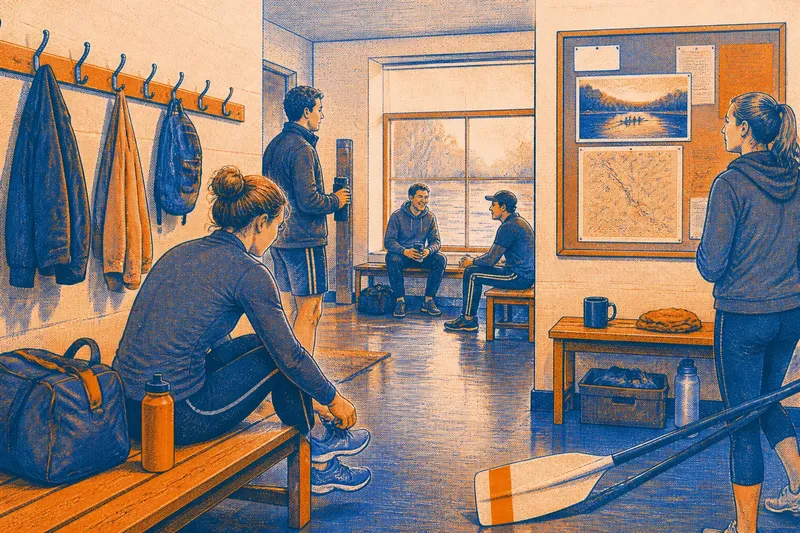
Imagine a fictional community rowing club called Alder Quay. Its boathouse has a narrow changing room beside the river, used by adult beginners, experienced rowers and a youth squad at different times. People arrive, change, collect their equipment and head out. After practice, most leave quickly. The committee wants a more welcoming club, but members disagree about what that means: a lounge, a better changing room, or simply a place to talk. The useful question is not which room looks most sociable. It is how a space can support preparation, privacy and informal company without assuming every member wants the same thing.
A changing room becomes social through repeated use
At Alder Quay, the changing room already holds more than clothes. People notice who is new, ask about a missed session, pass along news about a launch time or wait for a friend before leaving. These exchanges are brief, but their repetition gives the room a social role. The room does not need to become a formal meeting venue to matter; it needs to make ordinary contact possible.
That distinction helps explain why sporting spaces have taken on social roles over time. The changing area sits at a threshold: members arrive from everyday life, prepare together, then return from a shared activity. The routine creates natural pauses. Someone tying a shoe can hear a question. A person waiting for a shower can notice a familiar face. A quiet corner may let a first-time visitor settle before joining a group.
Yet no single club pattern is universal. A volunteer-run rowing shed, a school sports hall and a members’ tennis club may all call a room a clubhouse, but their schedules, access rules and customs differ. A space that feels warm to one group can feel exposed or crowded to another. Social life is shaped by who uses the room, when they use it and what the club considers appropriate—not by the label on the door.
At Alder Quay, the first change is conversational rather than architectural. The committee asks members what already happens before and after sessions. They hear that beginners often wait outside because they do not know where to put bags, while experienced rowers linger near the doorway to discuss weather and equipment. The useful insight is modest: the room has social activity, but its arrangement favors people who already know how to use it.
Small layout choices can invite or discourage conversation
Alder Quay’s room contains a long bench against one wall, hooks near the entrance and a table stacked with damp notices. People sit in a row facing their own bags. A narrow route to the exit makes stopping feel like blocking someone. The club does not need a grand renovation to address this; it needs to understand how furniture and circulation signal what is welcome.
The committee considers moving a freestanding noticeboard, clearing the table and creating a small place to sit near—but not inside—the main changing area. The aim is not to force conversation. It is to let someone wait, read a club notice or have a quick chat without standing in a doorway. A coat hook, a dry place for a water bottle and a visible schedule can matter more than decorative objects if they remove the awkwardness of arriving.
Privacy matters just as much as sociability. A shared clubhouse is not a public lounge in which every member must be visible. People may need a quiet moment, a private place to change or a clear route through the room. If changing facilities are shared across age groups or different needs, the club should make arrangements that respect dignity and applicable rules. The room’s social role should add choice, not take it away.
Say Alder Quay has a cluttered entrance where beginners stop to ask where to leave wet gear. The club clears that route, adds a clearly marked storage area and places a small bench in an adjoining dry corner. The expected observable result is simple: arrivals can put equipment away without holding up the doorway, and people who want to wait have a place to do so. It does not mean everyone will stay longer, nor should they have to.
Clubhouse habits should reflect the people who use the room
A room becomes familiar through repeated habits: greeting someone at the door, sharing a notice about a local event or making space for the next group. Some clubs build these habits around tea after training; others gather briefly to clean equipment or review the day. Alder Quay should not copy a tradition from another club just because it looks sociable. Its members need to decide which customs fit their schedules, resources and mix of participants.
The committee tries a modest routine: after certain weekend sessions, one volunteer keeps the adjoining dry area open for an informal cup of tea. The invitation is optional, and the activity does not replace coaching or club business. Members can leave, shower or join the conversation. The arrangement gives people a predictable opening for contact without turning every session into a social obligation.
That choice also reveals how a clubhouse can express group identity. Identity is not only displayed in framed photographs or team colors. It appears in who gets greeted, whose needs are anticipated and what stories are told about the club. A wall of historic trophies may connect long-standing members to the past, but a clear welcome notice and a useful place for new members’ questions can show that the group expects its future to include them.
For Alder Quay, the committee chooses a small display that changes with the season: a map of the river route, an invitation to an upcoming club gathering and a rotating photograph chosen by members. It leaves room for different kinds of participation. Someone who does not want to talk about competition can still feel part of the club through a shared location, a familiar routine or a practical contribution.
What should a club consider before changing the room?
Should a changing room double as a lounge?
Not necessarily. A club can create a nearby social area while keeping changing and preparation spaces focused on privacy and movement. The right arrangement depends on the building, the users and how the rooms are scheduled.
How can a club welcome people who are new?
Make the first visit legible: show where bags go, where equipment belongs and whom to ask for help. A named welcome contact can reduce uncertainty without requiring a newcomer to announce themselves to the whole room.
What makes a clubhouse feel shared rather than exclusive?
Members should be able to see how to use the space and join its routines without needing insider knowledge. Clear notices, accessible participation and attentive greetings can help, while private conversations or established traditions should not become tests of belonging.
How can a club tell whether a change suits its members?
Ask people who use the room at different times, including those who leave quickly or rarely speak at meetings. Then observe practical signs such as whether entrances stay clear, new arrivals know where to go and members can choose between conversation and privacy.
Alder Quay learns to treat the room as shared ground
In this invented situation, Alder Quay does not transform its boathouse into a bustling lounge. It clears a blocked route, makes storage easier to understand, adds an optional place to wait and establishes a low-key post-session gathering. Those changes support different needs at once: preparation remains possible, newcomers have clearer cues, and members who want company can find it without claiming the changing room for themselves.
The result is a shift in how people describe the space. They still call it the changing room when discussing lockers and wet gear, but they also refer to the dry corner as somewhere to catch up. That language follows use; it is not imposed by a sign. The social role grows from a practical environment that people can read and adapt, rather than a room decorated to suggest closeness.
The committee also learns what the room cannot do. It cannot settle every disagreement about club culture, replace inclusive coaching or make a person feel at home on demand. A physical setting can support connection, but members shape the meaning through their conduct. If a familiar group monopolizes the bench or newcomers are ignored, a welcoming notice will not fix the deeper issue.
There is a useful lesson here for any club considering a clubhouse: start with the transitions people already make. Notice where they wait, what they carry, whom they ask and where they hesitate. Then make one change that helps people move through the space with more ease or choice. For a changing room becoming a shared clubhouse, the strongest sign of progress may be a small one: someone new knows where to put a bag, and someone else has room to say hello.